Nine thousand lanes, no cars, walls on both sides: the first walk through Fès el-Bali feels like a maze. It is not. The city has been telling people where they are for centuries; you only need to know how to read it.
The rule in one line: six corners on the street sign, the lane is a dead end. Four corners, it goes through.
The golden tip: the shape of the sign
Every lane has a small enamelled street-name plaque at its entrance. Look at its shape before you turn in:
- A hexagonal plaque (six corners) means the lane is closed: a dead end that finishes at private doors.
- A rectangular or square plaque (four corners) means the lane goes through to another street.
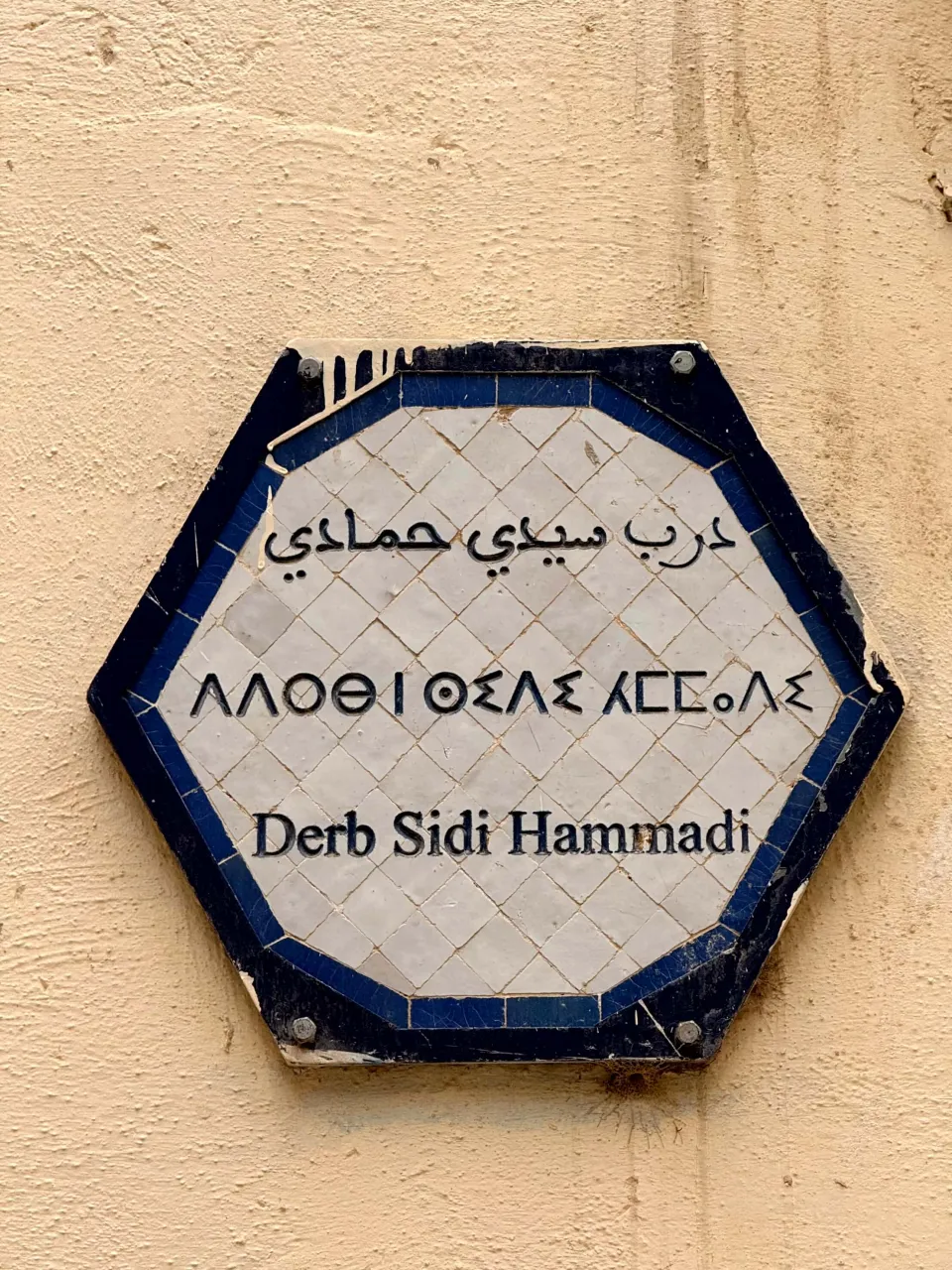
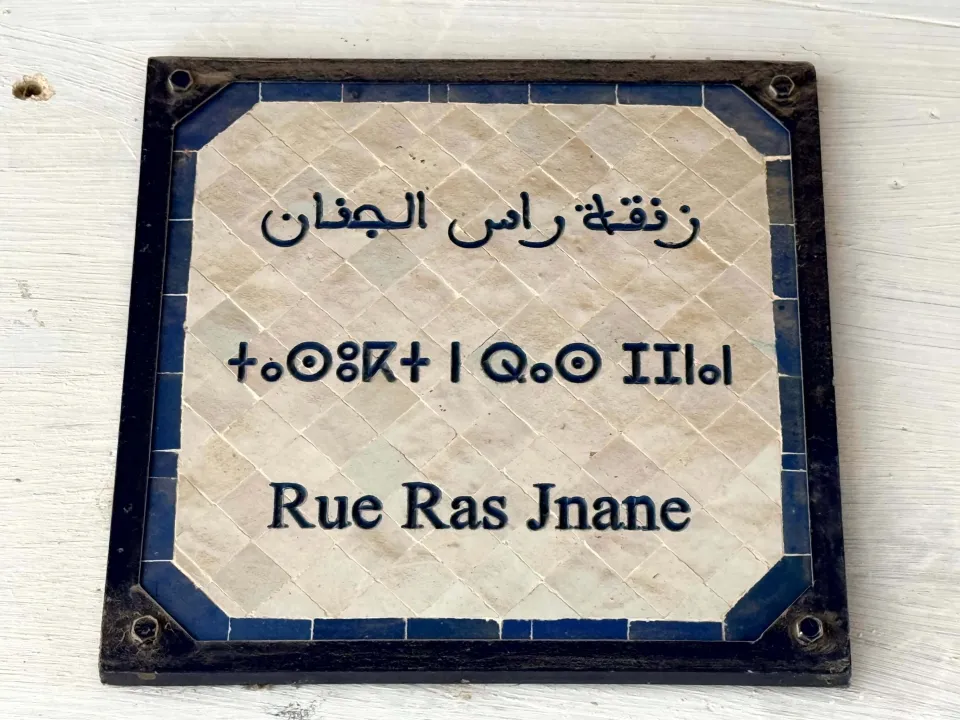
Once you know this, half of the wrong turns disappear. The other half you fix by walking downhill: the whole medina slopes towards the river and R'cif, where Dar Fayrouz is.
Use Maps.me, not Google Maps
Inside the walls, Google Maps often places you in the wrong lane. The free app Maps.me works offline and knows the medina's footpaths. Download the Morocco map before you arrive; our position is saved for you in the message we send the day before.
Arriving: the R'cif entrance
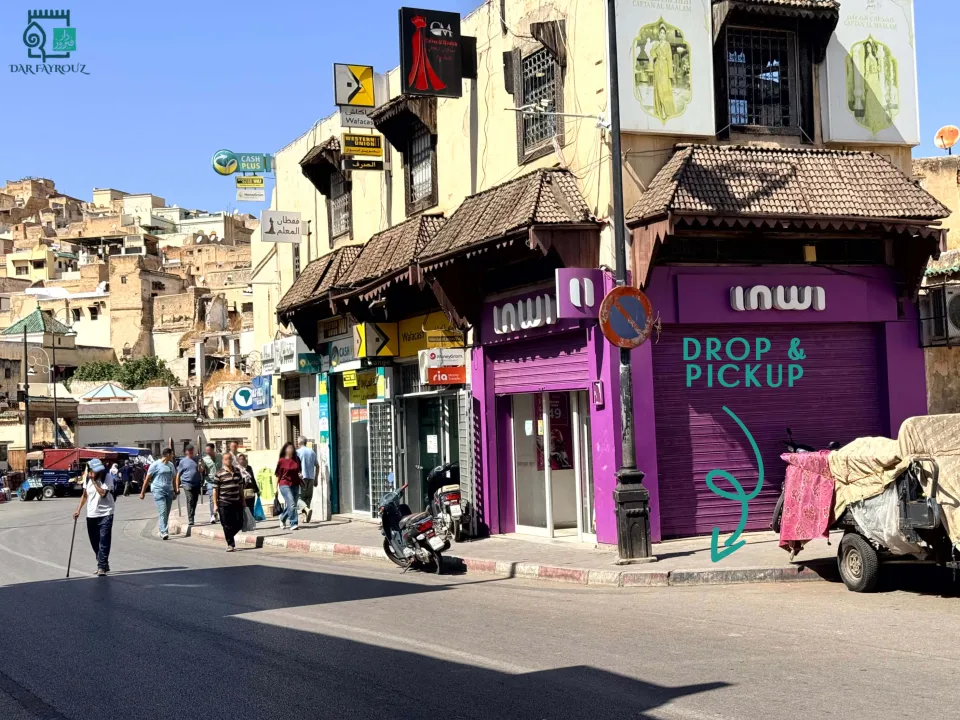
Every car, our private transfer or a taxi, stops at Place R'cif. The easy landmark is the purple "inwi" phone shop in front of the entrance: from there it is 2 to 3 minutes on foot to the riad, and our painted signs on the walls show the way. Our lane is Derb Sidi Hammadi, off Rue Ras Jnane.
Three habits that help
- If someone insists on guiding you "for free", smile and keep walking; ask a shopkeeper instead, they will point without following you.
- Photograph the plaque of our lane and of any square you pass; the names are your breadcrumbs.
- Lost anyway? Say "R'cif" to anyone, or call us. Being lost for ten minutes is part of Fès; being lost for an hour is not necessary.
With an official guide the puzzle becomes a story: half-day and full-day prices are on the good-to-know page, and our one-day walking plan gives you the route.